Ibex during rut: It aint over until the fat lady sings
Mountain Range: Iberian System
Area: Beceite
Altitude: 1001 - 1500
Organizer: Yo mismo
Diego Guerra
The nearly six-hour drive—many of them along winding mountain backroads—felt short thanks to the excitement and expectations that always come with the Spanish ibex rut during the December bank holiday: movement, chases, and old males that stay hidden all year and now briefly emerge from their shelters in pursuit of females.
However, the mountain, as so often happens, decided to impose its own rules.
What was initially supposed to be a weekend turned into five full days of hunting, marked by persistent rain, dense fog, and intermittent gusts of wind. Harsh conditions that, far from igniting the rut, seemed to keep it very low
Day 1
From the very first day it was clear something was wrong. There was very little movement for peak rut. A small group of females, all accompanied by young males, and no mature buck roaming, foretold a tough outing.
The mountain felt silent and heavy, lacking the activity one expects at this time of year, leaving me at the end of that first day soaked and with more doubts than certainties.
Sightings: 1 group of 6 females and 1 young male. 2 roe deer.
Day 2
The second day began with the same weather script: fog drifting in and out, uncomfortable wind, and constantly changing visibility. Choosing where to go based on the fog, we continued seeing an occasional female—few—and the same young males, but overall the hunt remained subdued until, almost at nightfall, a huge billy finally showed himself.
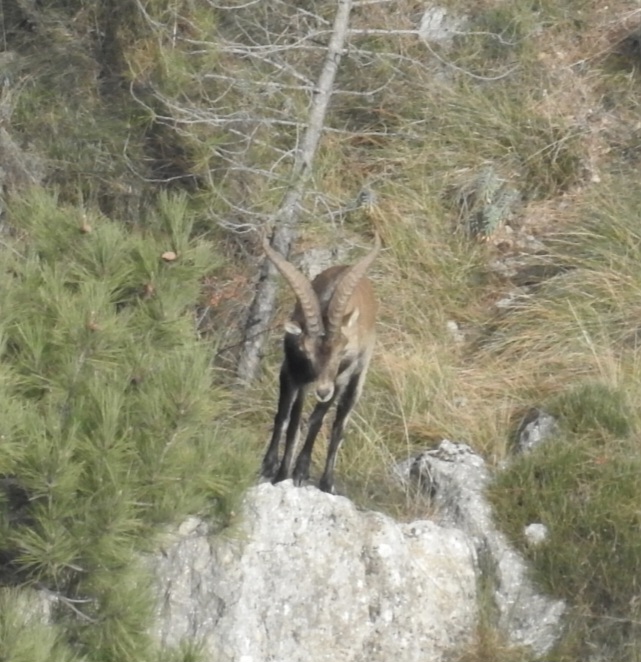
We saw him chasing females on the edge of a plateau bordering thick cover. It was the first clear sign of true rutting activity. A wide, long-bodied, old, heavy bily. He disappeared into the brush and minutes later reappeared standing atop the only visible rock outcrop, as if dominating the entire territory—a “Lion King” surveying his kingdom.
I center him in the scope, well supported, but he never gave a broadside—always facing straight on. The distance was around 430 meters, and with fading light, fog rolling in again, and a nearly impossible follow-up if he didn’t drop on the spot, I chose not to shoot.
He disappeared into the night, but took with him the lethargy of my spirit.
I now had a clear objective.
Day 3
We began the third day with a dawn stakeout on the same plateau. Three hours of rain. Some females and a young male appeared, but no sign of our patriarch.
At 9:30 I decided to move and try other areas without luck, and in the afternoon I returned once again for another stakeout at the same spot.
No results.
An entire day of persistence without reward.
Day 4
The fourth day started in a higher area on the opposite side of the reserve. More exposed to the elements, but full of rocky hideouts where I believed an old buck might find shelter from the wind.
There we located a buck of about 10 years, together with another younger one of five or six, and a single female. I had an easy approach and put him in the scope, but he was very short. He must have suffered badly from mange and would never develop into a good trophy. He looked healthy now, so I chose to leave him, hoping he would breed and pass on his antibodies to the next generation.
More worrying was spotting, a short while later, a female with her kid, both affected by mange. I attempted to cull them for sanitary control, but they vanished before we could even prepare the rifle.
I continued hunting the high ground through the morning without success. Around 2:00 p.m. I decided to drop down to the lower area at the base of the cliffs, a place I learned had not been hunted in six years.
No sooner had we started the stalk than a sounder of wild boar appeared at the edge of a pine stand. Two adult females with an army of piglets, which I watched for several minutes, enjoying their relentless rooting.
Shortly after, a young ibex buck appeared and “came to die,” passing within 40 meters of the boars. A nice animal, but too young, and I decided not to shoot.
After so much suffering with so little game, I felt like a romantic fool for letting him pass, but comforted myself with the belief that many true hunters would have done the same.
Then a boar appeared.
As if the mountain rewarded the right decision, he burst from the brush driving the piglets.
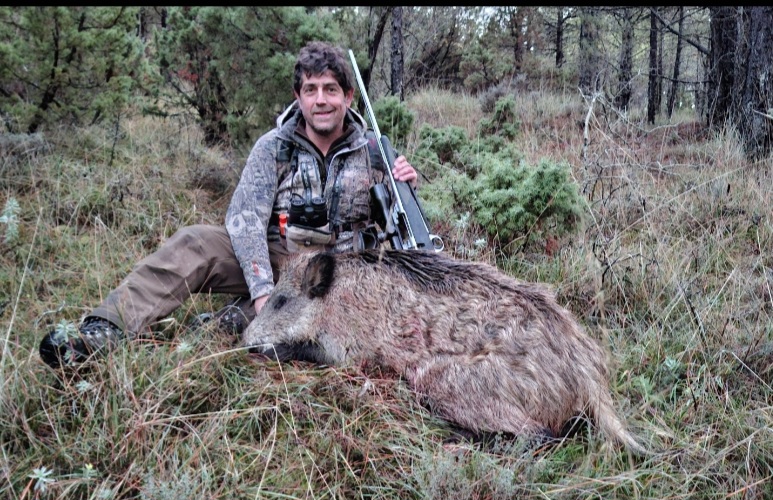
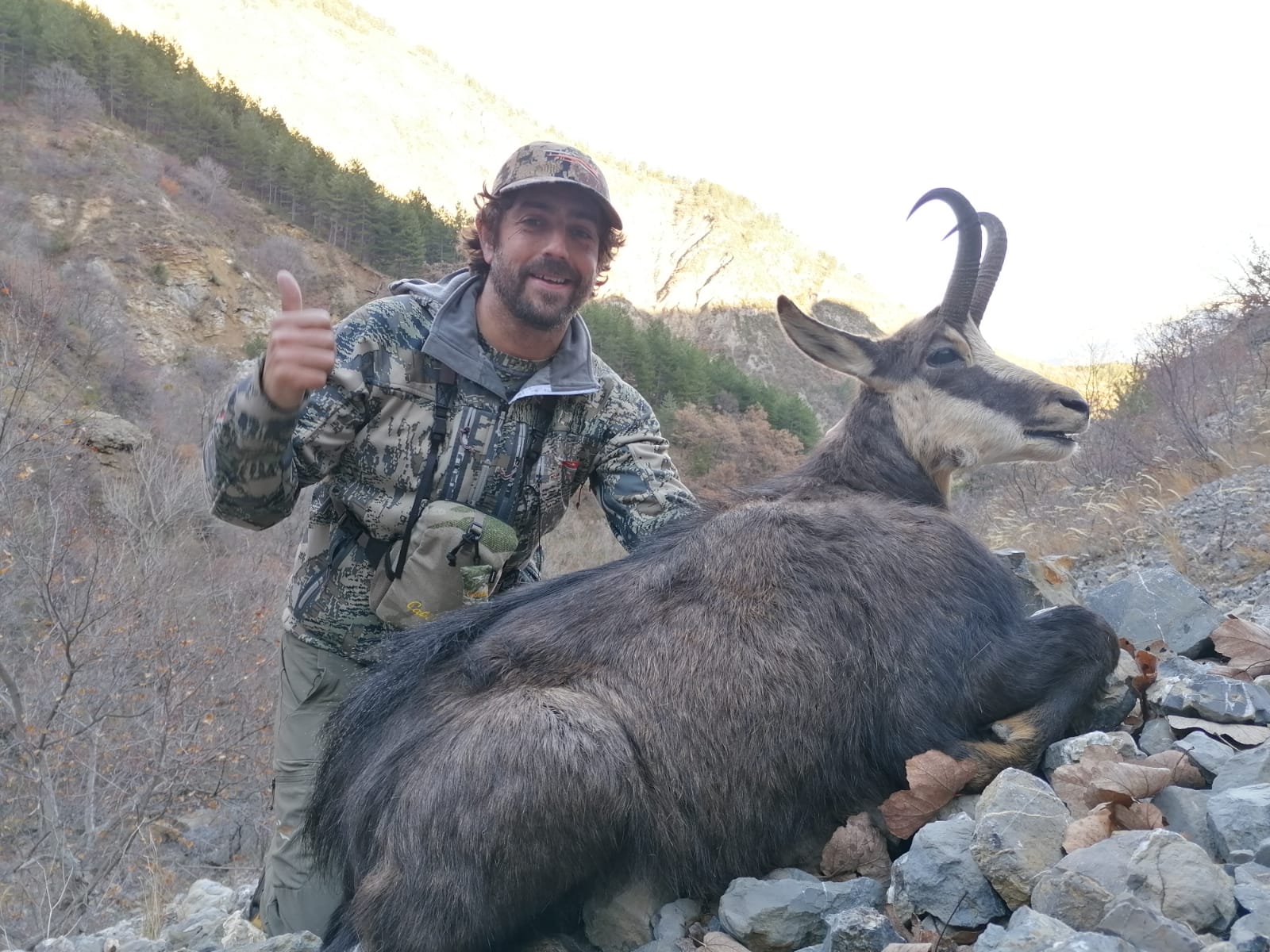
I shot him at 160 meters. He ran about 40 meters into the timber and died.
A fast, intense encounter that ended the day with a smile.
Day 5
On the fifth day I returned to that same area, choosing to further explore the boar zone and leave the old buck from the stakeouts for another time.
Passing through the pine stand where the boar had fallen the previous afternoon, I was surprised to see that neither foxes nor other boars had touched the remains overnight, something quite unusual.
I crossed the pines and reached an open plateau overlooking every nook and cranny of the high rocky faces of the reserve. A truly spectacular place—but the fog continued to toy with my senses: only seconds between one opening and the next to try to locate animals.
At 12:30 I decided to cut my losses and head back to the truck, accepting that the hunt was over. I had extended it three extra days, tried everything, and it was time to assume I was going home without a buck.
And then it happened.
Almost back to the vehicle, I heard the unmistakable sound of stones rolling.
I didn’t see him, but the commotion was far too heavy to be a roe deer or a boar.
The fog opened just enough…
And an old buck was climbing in short bursts, moving with that heavy, deliberate gait of animals that have seen everything. He was harassing a female, completely focused on her and oblivious to us and the rest of the group. He stood about 350 meters away, on the opposite slope.
To my right, two females sheltered in a rock crack were staring at me, trying to figure out what I was. Their presence limited any movement.
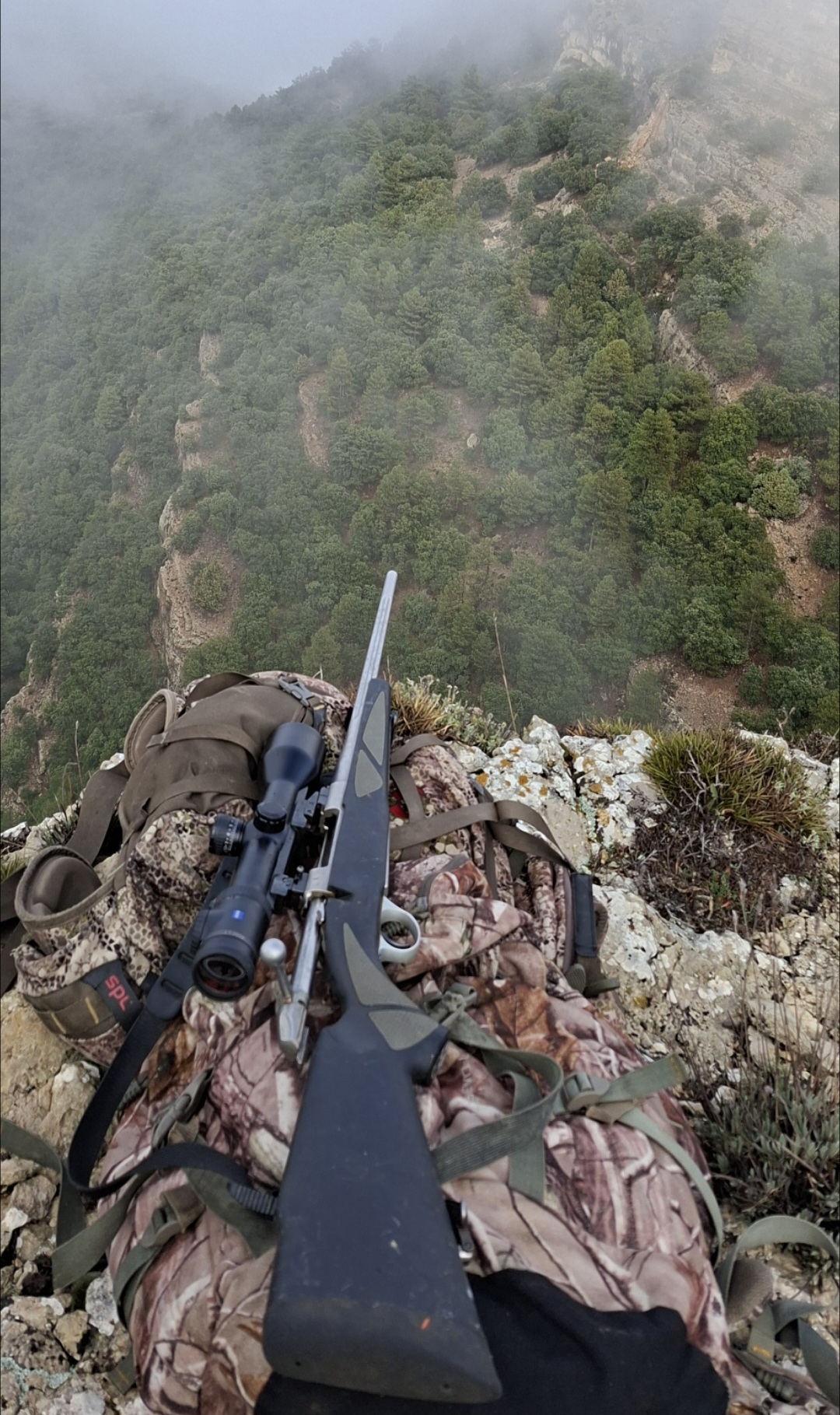
I dropped flat right there, knowing it wasn’t an ideal position. Just as I tried to put the buck in the scope… the fog closed in and he vanished.
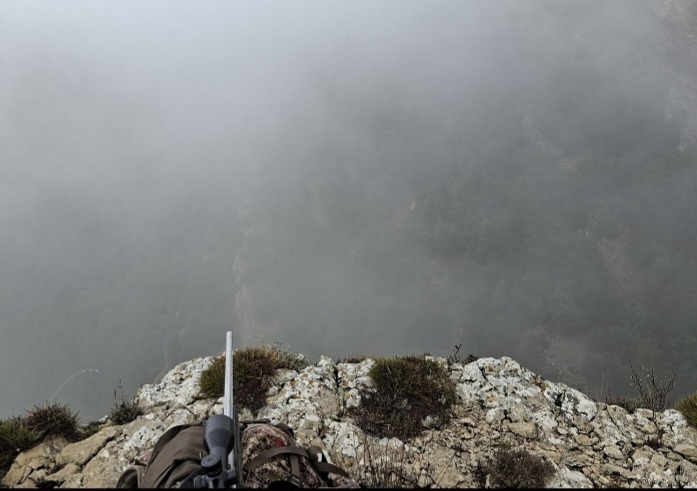
Using that white curtain, I crawled to improve my position, always hidden by the fog, and lay down at the edge of the cliff.
The fog opened again. I saw him lower down, crossing a clearing, following the females—just a fraction of a second and without stopping.
Then fog again.
I gave him up for lost. I lamented and whispered to my friend David that it couldn’t be possible to have such good luck to see him in stoppage time and such bad luck not to be able to shoot him.
But I stayed put.The fog lifted.
No sign.
Suddenly, a young buck appeared in a line of trees. I could see him because, being much higher, I had angles into small openings within the timber.
And 20 meters in front of him… the female…and behind her…the old monarch.
The situation was absurd, unreal: when I could already see the truck 150 meters away, when the hunt was mentally over, when nobody expected anything.
There was no time to think—because the mountain would wrap him again in its blanket of scrub in a second—only the automatic motion of settling the crosshairs on the shoulder and gently pressing the trigger.
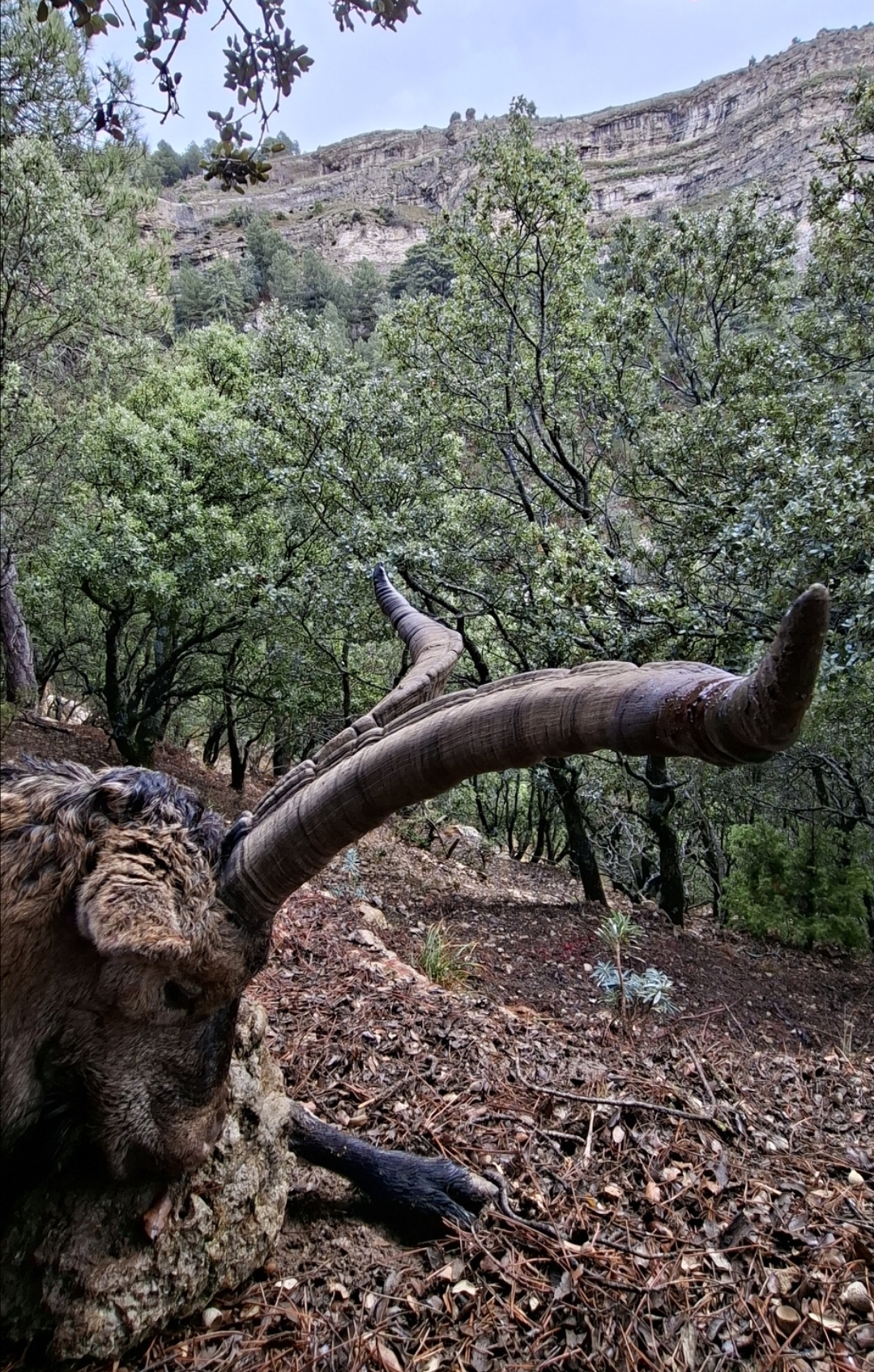
The animal dropped on the spot.
A death exactly as we always hope for.
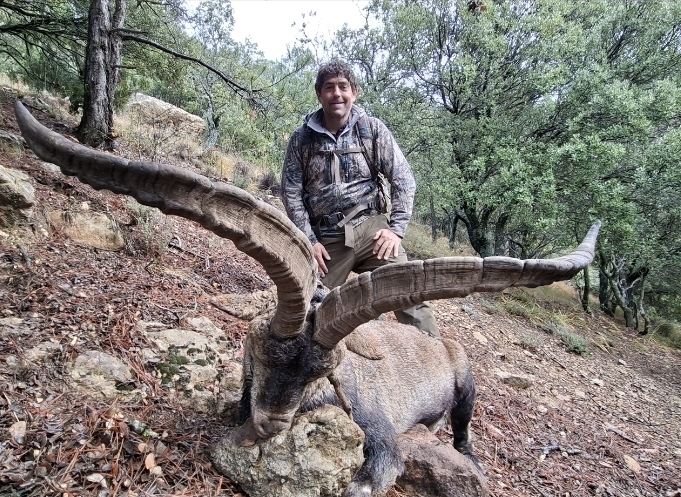
The final shot distance was 256 meters, steep downhill, with a minimal shooting window.
An old, rock-hard billy, 12/13 years old, who had spent at least two of those years suffering from mange.
After the shot, an uncontrollable tremor came over me—a mix of nerves, emotion, and disbelief after five days of fog, rain, and hard decisions.
Recovering him was another serious task, on very steep ground, forcing us to skin him on the spot… but that is another story.
We reached the truck at 2:50 p.m., completely blowing past our planned departure time. And I couldn´t care less
Report Gallery